Introduction
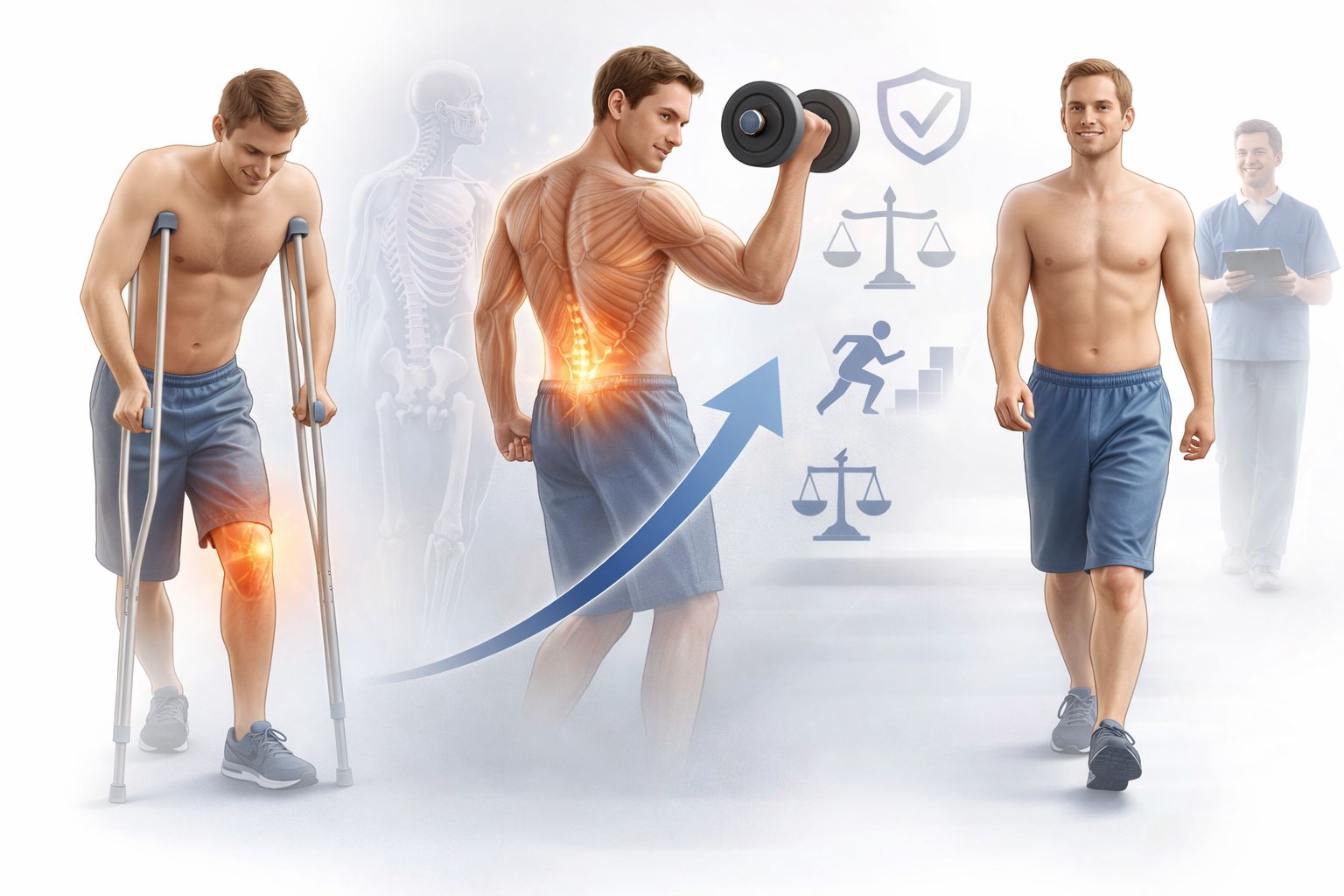
In musculoskeletal rehabilitation and the development of physical performance, the concept of “muscle strength” is generally accepted as the cornerstone of recovery and the ultimate goal. However, a frequently encountered question in clinical practice and sports science challenges the limits of this approach: When muscles become stronger, does everything really improve? This question brings forth the debate of whether rehabilitation is merely a process of biomechanical strengthening or the management of complex neurophysiological adaptations.[1, 2] Although strength gain is a critical component that increases the body’s resistance to mechanical loads and expands functional capacity, modern scientific literature shows that strength alone does not create a miracle; rather, when integrated with other capacities, it dominates the recovery process.[2, 3] This report comprehensively examines the physiological foundations of muscle strength, its neurological and structural adaptations, its paradoxical relationship with pain, and its role in rehabilitation planning in light of scientific evidence.
Summary: A Balanced Perspective
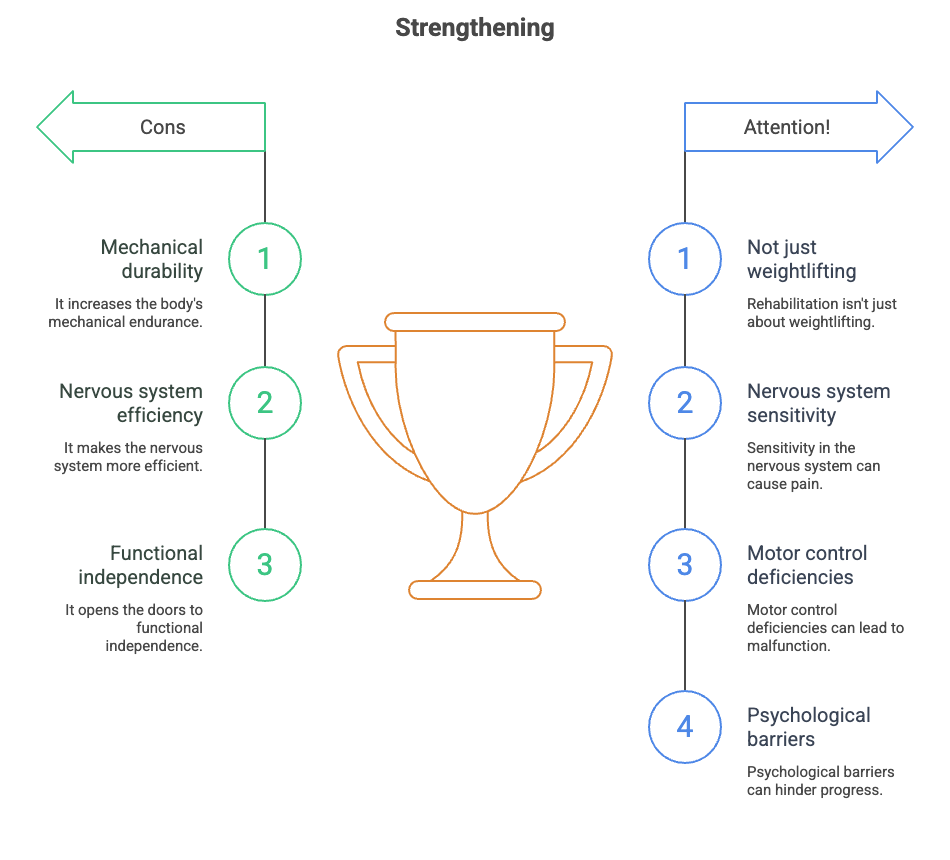
The answer to the question “When muscles become stronger, does everything really improve?” can be summarized as: “No, but strength is an indispensable foundation for everything to improve.” Strength gain increases the body’s mechanical resilience, makes the nervous system more efficient, and opens the door to functional independence.[4, 6, 18] However, rehabilitation is not merely a process of “lifting weights.” Sensitization within the nervous system (central sensitization), deficits in motor control, and the individual’s psychological barriers can cause even the strongest muscles to remain painful or dysfunctional.[3, 26, 49]
An effective rehabilitation program should adopt a structure that considers strength as a central focus but integrates it with motor control, balance, flexibility, and pain education. Strength gain is not an end goal, but a tool used to improve quality of life and make the individual more resilient. In light of scientific evidence, the approach that “strength gain is important, but rehabilitation is not solely about strengthening” represents the most sustainable and accurate vision for both healthcare professionals and individuals engaged in exercise.[1, 2, 22]
Physiological Definition of Muscle Strength and Mechanisms of Development
Muscle strength is defined as the maximum voluntary torque or force that a muscle or muscle group can produce against an external resistance at a given velocity and range of motion.[4, 5] This capacity is not only related to muscle size but is also directly associated with how efficiently the nervous system can activate the muscle.[6, 7] Strength development is shaped by the intensity, volume, and frequency of mechanical stress applied to the body and is triggered by the principle of “overload.”[8, 9]
During strength training, muscle fibers and the extracellular matrix are mechanically stressed. This stress increases calcium ion permeability in the muscle cell membrane, activating protein synthesis processes, particularly the mTOR signaling pathway.[7, 10] Mechanical tension creates micro-damage in muscle fibers, leading to the activation of satellite cells and resulting in the repair of damaged tissue with a stronger structure.[7, 10] The following table summarizes the different components of strength and their significance in rehabilitation:
| Strength Component | Scientific Definition | Importance in Rehabilitation |
|---|---|---|
| Maximal Strength | The highest amount of force produced in a single maximal voluntary contraction.[4, 5] | Creates functional reserve; allows daily tasks to be performed with less effort. |
| Power | The combination of force and velocity; work produced per unit time.[4, 11] | Essential for fall prevention and rapid movements, especially in older adults. |
| Strength Endurance | The ability of a muscle to sustain a given resistance for a prolonged period without fatigue.[11, 12] | Reduces injury risk in postural control and repetitive work activities. |
| Explosive Strength | The rate at which force is produced in a very short time (0–200 ms).[4, 13] | One of the most critical parameters for return to sport in athletic rehabilitation. |
Strength development is not a static process; on the contrary, the type of training (isometric, concentric, eccentric) directly affects the outcomes. For example, eccentric exercises (muscle contraction while lengthening) have the potential to create greater mechanical tension and micro-damage in the tissue, thereby more strongly triggering both hypertrophy and neural adaptations.[1, 10]
Neurological Adaptations of Strength Gain: The Efficiency Revolution of the Nervous System
When strength training begins, the dramatic increase in strength observed within the first few weeks (typically the first 2–4 weeks) results primarily from improvements in the nervous system rather than increases in muscle mass.[6, 10, 14] During this phase, the nervous system learns to activate and coordinate existing muscle fibers more effectively. This process is referred to as “neuromuscular adaptation” and involves changes at every level of the central nervous system.[10, 14]
Motor Unit Recruitment and Firing Rate
The nervous system gains the ability to recruit more motor units (a motor neuron and the muscle fibers it innervates) simultaneously during a contraction. This is called “motor unit recruitment.”[4, 6] While untrained individuals can activate only a portion of their muscle fibers with maximal effort, strength training enhances this capacity. Additionally, the frequency at which neural signals are sent, known as “rate coding,” increases, allowing force to be produced more rapidly and intensely.[4, 7]
Motor Unit Synchronization and Antagonist Co-Activation
Another critical aspect of adaptation is the improved timing of motor unit firing. Synchronization increases efficiency, particularly in high-speed and power-demanding movements.[6, 10] Perhaps the most important neural change in rehabilitation is the reduction of unnecessary contraction of “antagonist” muscles (those that oppose the target muscle).[6] For example, in an individual attempting to strengthen the quadriceps, the hamstrings may initially contract as a protective mechanism, limiting the movement. As the nervous system adapts, this braking effect decreases, resulting in an increase in “net force.”[6, 10]
Cross-Education Phenomenon
One of the most striking pieces of evidence for neurological adaptation is that unilateral training can also produce strength gains in the untrained contralateral limb. This process, known as “cross-education,” is critically important in cases where one limb is immobilized due to injury or casting.[15] Research shows that strength training of the unaffected limb can significantly slow strength loss and muscle atrophy in the injured limb through stimulation of cortical areas in the nervous system and changes in transcallosal inhibition.[15]
Structural and Morphological Adaptations of Strength Gain
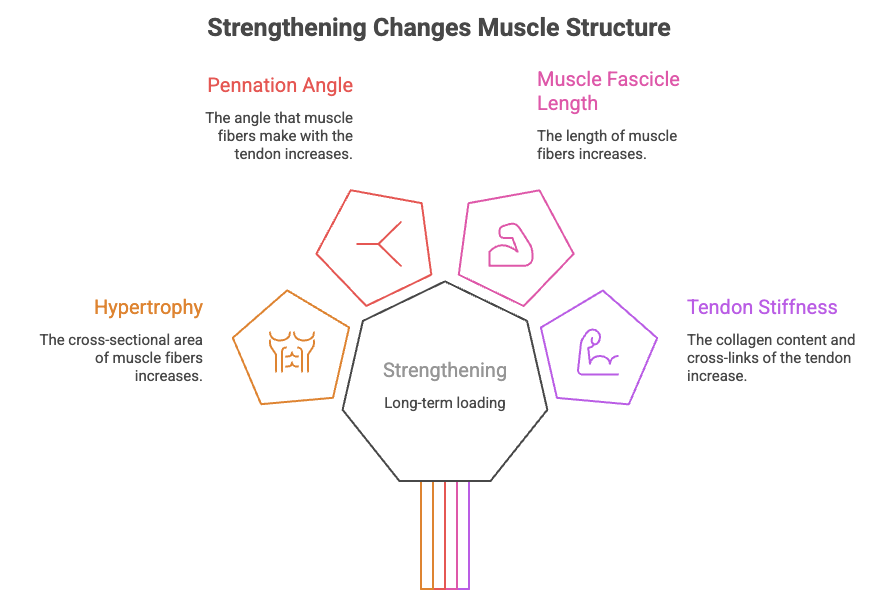
After the nervous system learns to use the muscle more efficiently, long-term loading (typically 6–12 weeks) leads to permanent structural changes in muscle tissue.[7, 14] These changes mechanically increase the muscle’s force production capacity.
Hypertrophy and Changes in Muscle Architecture
Hypertrophy refers to the increase in the cross-sectional area (CSA) of muscle fibers and occurs primarily through volumetric growth of myofibrils.[7, 10] However, adaptation is not limited to size increase; muscle architecture also changes. The “pennation angle,” which is the angle at which muscle fibers attach to the tendon, increases. This allows more muscle fibers to be packed into the same muscle volume, maximizing force production capacity.[7] Additionally, it is known that eccentric training can increase muscle fiber length (fascicle length), enabling the muscle to produce greater force at longer lengths.[1, 10]
Tendon and Connective Tissue Stiffness
Strength gains occur not only in muscle fibers but also in tendons that transmit force to bone. Mechanical loading increases the collagen content and cross-linking within the tendon, thereby increasing tendon stiffness.[4, 16] A stiffer tendon transmits force from muscle to bone more rapidly and efficiently, enhancing movement efficiency. This adaptation is a primary target in the rehabilitation of tendinopathies to restore the tissue’s load-bearing capacity.[16, 17]
Effects of Strength Gain on Daily Life and Function
Strength is a fundamental determinant of independence not only in sports but in every aspect of daily life—from the kitchen to the bathroom, from climbing stairs to shopping.[18, 19] Particularly in the aging population, loss of muscle strength (dynapenia) is one of the strongest predictors of physical disability and fall risk.[18, 20]
Independent Living Capacity and the Barthel Index
Scientific studies demonstrate that lower extremity muscle strength (LMS) is directly related to the ability of older adults to maintain activities of daily living (ADL).[18] Basic functions such as climbing stairs, standing up from a chair, bathing, and dressing require muscle force above a certain threshold. When strength falls below this threshold, the individual becomes dependent on others. Research shows that improvements in leg strength significantly increase independence scores (Barthel Index) in older adults with hypertension or those requiring care.[18, 19]
Fall Prevention and Reserve Capacity
Strength gain not only enables the performance of current tasks but also creates a “safety reserve” against unexpected situations. An individual with strong muscles can quickly generate the force needed to regain balance when they trip.[20, 21] A meta-analysis conducted on individuals at risk of falling has shown that strength training significantly reduces fall rates. This effect is related not only to muscle mass but also to rapid neural activation and joint stabilization.[21]
Daily Task Required Type of Strength Clinical Outcome Standing Up from a Chair Concentric lower extremity strength.[18] Mobility independence. Descending Stairs Eccentric control and strength.[1] Joint stability and safe descent. Walking Speed Explosive power and lower extremity strength.[20, 21] Participation in social life and cardiovascular health. Maintaining Balance Reactive strength of the trunk and ankle.[22] Reduced risk of falls and fractures.
The Scientific Relationship Between Strength Gain and Pain
One of the most complex areas of rehabilitation is the non-linear relationship between strength gain and pain reduction. There is strong evidence that exercise, particularly resistance training, reduces chronic pain; however, this improvement cannot always be explained by a simple mechanical rationale such as “stronger muscles stabilizing the joint better.”[2, 16]
Exercise-Induced Analgesia
Strength training can have a “medicinal” effect on the nervous system. Endorphins and enkephalins released during exercise activate pain control systems in the brain and spinal cord, reducing pain perception.[23] Additionally, controlled mechanical loading “desensitizes” the nervous system, increasing the individual’s pain threshold during movement. This can lead to reduced pain perception even in the absence of structural changes in the tissue.[2, 24]
Pain and Motor Output Theories
There are several fundamental theories explaining the effect of pain on force production, and these theories directly influence clinical decision-making [25]:
- Strength Inhibition Theory (SIT): Proposes that pain suppresses the muscle’s maximal force production via the nervous system.[25] This implies that strength testing in a patient with pain reflects not the true capacity of the muscle, but the capacity allowed by pain.
- Pain Adaptation Theory: Suggests that the activity of the agonist muscle in the painful area decreases, while the activity of the antagonist muscle increases to protect the joint.[25]
- Protective Response Theory (Contemporary Approach): Suggests that pain or the threat of pain reorganizes the motor system with the aim of protection.[25] This may manifest as load redistribution to different muscle groups or complete restriction of movement.
Pain Despite Strong Muscles: The Phenomenon of Central Sensitization
Having extremely strong muscles does not mean that an individual is immune to pain. In clinical practice, it is common to encounter individuals with chronic knee pain despite excellent quadriceps strength, or persistent low back pain despite strong “core” muscles. The key to this paradox lies in the dysfunction of the nervous system’s “alarm system,” known as “Central Sensitization.”[26, 27, 28]
Mechanism of Central Sensitization
Central sensitization is the condition in which nociceptive (pain-transmitting) neurons in the central nervous system become excessively sensitive to normal or subthreshold inputs.[26, 29] In this state, even if tissue healing is complete, the brain continues to interpret incoming signals as threats and produces pain. Allodynia (pain from normally non-painful stimuli) and hyperalgesia (exaggerated pain from mildly painful stimuli) are typical features of this condition.[26, 28] The issue here is not muscle weakness, but the nervous system being stuck in “pain mode.” In such patients, strength training alone may sometimes exacerbate symptoms; therefore, treatment should include biopsychosocial approaches such as pain education, sleep hygiene, and stress management.[24, 27, 30]
Situations Where Strength Alone Is Not Sufficient
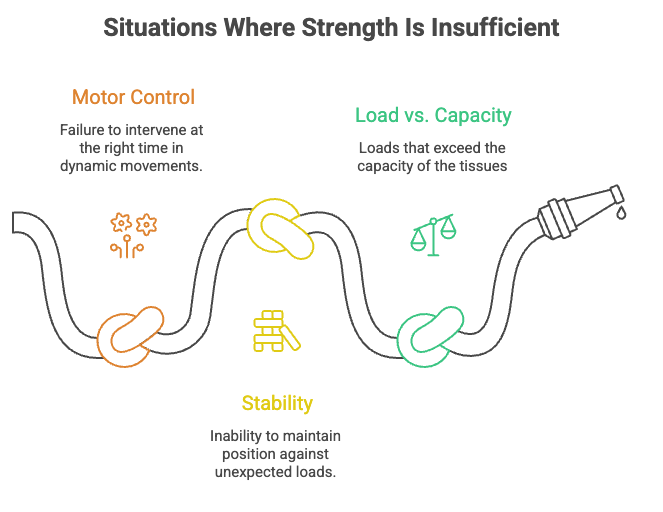
In the rehabilitation process, strength represents only one level of the pyramid. Situations where strength is sufficient but function cannot be restored due to deficiencies in other capacities constitute the “gray areas” of rehabilitation.[3, 31]
Motor Control and Movement Quality
The ability of a muscle to produce high force in a static test does not guarantee that it will activate at the correct time and magnitude during dynamic and complex movements (such as landing from a jump or sudden direction changes).[3, 32] Especially after Anterior Cruciate Ligament (ACL) surgery, patients may regain quadriceps strength but continue to demonstrate “valgus” (inward collapse) movement patterns due to impaired motor control.[3] This reflects the nervous system’s inability to properly manage the available “strength.”
Stability and Proprioception
Stability is the ability of a joint to maintain its position against unexpected external loads. Strength is a necessary raw material for stability, but without “joint position sense” (proprioception) and neuromuscular coordination, this strength cannot be effectively utilized.[32, 33] Research shows that neuromuscular training (focused on balance and coordination) can sometimes produce superior outcomes in functional knee scores compared to pure strength training.[33]
Load vs. Capacity Balance
The fundamental philosophy of rehabilitation is based on the balance between “Capacity vs. Load.” Every tissue (muscle, tendon, joint) has a certain biological capacity threshold that it can تحمل. If the applied load (running distance, workload, training intensity) exceeds the tissue’s capacity, pain or injury occurs.[34, 35, 36]
- Low Capacity – Normal Load: Even normal daily activities cause pain due to muscle weakness.
- High Capacity – Excessive Load: A very strong athlete sustains injury due to exposure to training volume beyond their capacity (overtraining).[35, 37]
The primary goal of strength training is to increase this tissue capacity; however, during this process, it is essential that the load is applied progressively.[8, 34]
The Role and Priorities of Strength Training in the Rehabilitation Process
In rehabilitation, strength training is the most powerful tool that creates permanent and adaptive changes in tissue, unlike passive and temporary treatments (massage, electrotherapy, heat application).[1, 2] However, determining when and how to use this tool requires strategic planning.
In Which Situations Is Strength Training a Priority?
In the following clinical conditions, strength training should be placed at the center of rehabilitation:
- Post-Operative Atrophy: Rapid muscle loss following surgery (ACL, prosthesis, etc.).[22, 38]
- Sarcopenia and Dynapenia: Situations in older adults where functional independence begins to decline.[19, 20]
- Chronic Tendinopathies: In Achilles, patellar, or rotator cuff tendinopathies, heavy slow resistance (HSR) exercises are the primary choice to increase the tendon’s load-bearing capacity.[16, 17, 39]
- Osteoarthritis: Strengthening surrounding muscles (e.g., quadriceps for knee OA) to reduce load on the joint surface.[40, 41]
| Rehabilitation Goal | Exercise Selection | Intensity and Dosage |
|---|---|---|
| Pain Modulation | Isometric contractions (45-second holds).[17, 39] | 70–80% maximal effort, low irritation. |
| Muscle Growth (Hypertrophy) | Concentric-eccentric dynamic exercises.[7, 42] | 8–12 repetitions, 60–80% 1RM. |
| Power and Explosiveness | High-velocity, low-load or plyometric exercises.[11, 38] | 30–60% 1RM, maximal speed. |
| Tendon Capacity | Heavy slow resistance training (HSR).[17, 43] | 6–8 repetitions, slow tempo (3s up, 3s down). |
The Relationship of Strength Gain with Other Capacities
Strength is like the center of an island; endurance, control, and mobility develop around this center. Increasing strength creates a “lever” effect that facilitates the development of other capacities.[13, 44]
Strength and Endurance
An increase in maximal strength reduces the “relative effort” required to perform a given task. For example, when an individual’s maximal strength increases from 20 kg to 40 kg, carrying 10 kg is no longer 50% of their maximum, but 25%. This results in less fatigue and improved endurance.[13]
Strength and Mobility (Flexibility)
A common misconception is that weight training shortens muscles and reduces flexibility. However, scientific meta-analyses show that resistance training performed through a full range of motion (ROM) is as effective as, and sometimes more effective than, static stretching in increasing joint ROM.[45] The muscle learns to control its newly gained strength across these wider ranges, resulting in more “functional” mobility.
Individualization and the Concept of Load (Dosage)
In physical therapy, exercise is a form of medicine, and like any medication, the wrong dose can be harmful while the correct dose is therapeutic. Although authorities such as ACSM and NSCA provide specific dosage parameters for effective strength development, in clinical populations, this dosage must be individualized according to the patient’s pain level, stage of recovery, and biological tolerance.[5, 44, 46]
FITT-VP Principles and Progressive Overload
- Frequency: Generally recommended 2–3 days per week; 48-hour rest periods are critical for muscle recovery.[5, 11]
- Intensity: Loads of 60% 1RM and above are ideal for strength development. However, in patients with chronic pain, intensity should be adjusted according to the patient’s “acceptable pain” threshold.[11, 43]
- Time: Refers to sets and rest intervals. Longer rest (2–3 minutes) is preferred for maximal strength, while shorter rest is used for endurance.[4, 44]
- Type: Multi-joint (e.g., squat, bench press) vs. isolation exercises. In early rehabilitation, isolation exercises are prioritized, while multi-joint movements are emphasized in later stages.[47, 48]
Acute/Chronic Workload Ratio and the 10% Rule
The safest way to prevent injuries and increase capacity is to progressively increase load. Weekly load increases are recommended to be around 10–15%.[14, 43] In modern sports science, the “Acute:Chronic Workload Ratio” (ACWR) is calculated by dividing the workload of the past week by the average workload of the past month. A ratio between 0.8 and 1.3 is considered the “sweet spot,” allowing adaptation to occur without injury.[14]
Clinical Implications: What Do These Insights Mean for Exercise Planning?
Understanding that strength gain is not only a biomechanical change but also a neuropsychophysiological process fundamentally transforms physiotherapy approaches. The following strategic points should be considered when planning exercise:
- Do Not Focus Only on Muscles: Especially in the early stages of rehabilitation, the target is the “nervous system.” Movement quality, motor unit recruitment, and breaking fear-avoidance behaviors take precedence over muscle mass.[6, 49]
- Utilize Eccentric Loading: For tendon healing and rapid strength gains, performing the eccentric phase (lowering phase) slowly and in a controlled manner maximizes tissue adaptation.[1, 10]
- Include Pain Education in the Process: Understanding that pain does not always indicate tissue damage (central sensitization) increases adherence to strength training and self-efficacy.[27, 30, 50]
- Start with Isometrics: In the acute phase or when joint irritation is high, isometric contractions (holding without movement) help maintain strength and provide an analgesic effect.[17, 39]
- Holistic Assessment: Strength is important but not sufficient on its own. The patient’s stability, proprioception, and psychosocial stressors in daily life should be integrated into the capacity-load model.[24, 34, 36]
References
- The role of strength training in rehabilitation – What does research …, https://www.savonia.fi/en/articles-pro/the-role-of-strength-training-in-rehabilitation-what-does-research-say/
- Is resistance training with external loads superior to unloaded exercise in the management of chronic low back pain? A systematic review and meta-analysis | Archives of Physiotherapy, https://www.archivesofphysiotherapy.com/index.php/aop/article/view/3533
- Neuromuscular Control Deficits After Anterior Cruciate Ligament Reconstruction: A Pilot Study Using Single-Leg Functional Tests and Electromyography – MDPI, https://www.mdpi.com/2411-5142/10/1/98
- The Importance of Muscular Strength: Training Considerations, https://pubmed.ncbi.nlm.nih.gov/29372481/
- Resistance Exercise Minimal Dose Strategies for Increasing Muscle …, https://pmc.ncbi.nlm.nih.gov/articles/PMC11127831/
- Neuromuscular adaptations to resistance training in elite versus recreational athletes – PMC, https://pmc.ncbi.nlm.nih.gov/articles/PMC12183069/
- Effects of strength training on neuromuscular adaptations in the development of maximal strength: a systematic review and meta-analysis – PMC, https://pmc.ncbi.nlm.nih.gov/articles/PMC12130258/
- 8 Principles of Exercise Prescription for 2025 Fitness, https://www.cartwrightfitness.co.uk/principles-of-exercise-prescription/
- Load Management: What It Is and What It Is Not! – PMC, https://pmc.ncbi.nlm.nih.gov/articles/PMC10293561/
- Physiological and Neural Adaptations to Eccentric Exercise: Mechanisms and Considerations for Training – PMC, https://pmc.ncbi.nlm.nih.gov/articles/PMC4620252/
- American College of Sports Medicine Position Stand. Resistance Training Prescription for Muscle Function, Hypertrophy, and Physical Performance in Healthy Adults: An Overview of Reviews – PMC, https://pmc.ncbi.nlm.nih.gov/articles/PMC12965823/
- Adaptations to Endurance and Strength Training – PMC – NIH, https://pmc.ncbi.nlm.nih.gov/articles/PMC5983157/
- Training Specificity for Athletes: Emphasis on Strength-Power Training: A Narrative Review – PMC, https://pmc.ncbi.nlm.nih.gov/articles/PMC9680266/
- Research-Backed Protocols for Getting Back to Maximum Loads – True Sport Physical Therapy, https://www.truesportsphysicaltherapy.com/blogs/evidence-based-load-progression-after-strength-training-injuries
- Cross-Education of Strength: From Theory to Practice in Contemporary Sports Rehabilitation—A Narrative Review and Clinical Implications – PMC, https://pmc.ncbi.nlm.nih.gov/articles/PMC12638512/
- Tendon neuroplastic training: changing the way we think about tendon rehabilitation: a narrative review, https://bjsm.bmj.com/content/50/4/209
- Tendinopathy – rehab progression – part 1 – BJSM blog – social media’s leading SEM voice, https://blogs.bmj.com/bjsm/2013/07/23/tendinopathy-rehab-progression-part-1/
- Comparison of Muscle Strength and The Ability of Activities of Daily Living in Older Adults Requiring Care With and Without Hypertension – PMC, https://pmc.ncbi.nlm.nih.gov/articles/PMC12401209/
- Muscle mass, strength, and physical performance predicting activities of daily living: a meta‐analysis – PMC, https://pmc.ncbi.nlm.nih.gov/articles/PMC7015244/
- Relationship between muscle mass and muscle strength with physical performance in older adults: A systematic review – PMC, https://pmc.ncbi.nlm.nih.gov/articles/PMC10683395/
- Functional fitness and physical independence in later years: cut-off values and validation, https://pmc.ncbi.nlm.nih.gov/articles/PMC11369993/
- The Role of Strength Training After ACL Reconstruction – Medical Tourism, https://www.medicaltourism.com/articles/the-role-of-strength-training-after-acl-reconstruction
- A Systematic Review of the Effects of Exercise and Physical Activity on Non-Specific Chronic Low Back Pain – PMC, https://pmc.ncbi.nlm.nih.gov/articles/PMC4934575/
- Biopsychosocial Approach To Pain – Break Free Physical Therapy – Springfield IL, https://www.breakfreephysicaltherapy.com/services/biopsychosocial-approach-to-pain/
- The interaction between pain and movement – PMC, https://pmc.ncbi.nlm.nih.gov/articles/PMC6335190/
- CENTRAL SENSITIZATION IN PATIENTS WITH CHRONIC MUSCULOSKELETAL PAIN, https://pmc.ncbi.nlm.nih.gov/articles/PMC12128804/
- What is Central Sensitization? – Institute for Chronic Pain, https://www.instituteforchronicpain.org/understanding-chronic-pain/what-is-chronic-pain/what-is-central-sensitization
- What is Central Sensitization? | MoreGoodDays® Pain-management Program, https://www.moregooddays.com/post/what-is-central-sensitization
- The Role of Central Sensitization in Chronic Pain – OHSU, https://www.ohsu.edu/sites/default/files/2020-10/MSK2020_Colgan.pdf
- Shifting Perspectives: How to Manage Chronic Pain with the Biopsychosocial Model, https://www.capc.org/blog/shifting-perspectives-how-to-manage-chronic-pain-with-the-biopsychosocial-model/
- Analysis of Motor Control in Patients With Low Back Pain: A Key to …, https://pmc.ncbi.nlm.nih.gov/articles/PMC7393666/
- Effects of neuromuscular training on knee joint stability after anterior cruciate ligament reconstruction – PMC, https://pmc.ncbi.nlm.nih.gov/articles/PMC4713755/
- (PDF) Neuromuscular Training Versus Strength Training During First 6 Months After Anterior Cruciate Ligament Reconstruction: A Randomized Clinical Trial – ResearchGate, https://www.researchgate.net/publication/6385587_Neuromuscular_Training_Versus_Strength_Training_During_First_6_Months_After_Anterior_Cruciate_Ligament_Reconstruction_A_Randomized_Clinical_Trial
- Load vs. Capacity: Building Resilience Without Overload – Unity Health & Performance, https://www.unityhealthperformance.com/post/load-vs-capacity-building-resilience-without-overload
- Balancing training load and tissue capacity – BJSM blog – social …, https://blogs.bmj.com/bjsm/2016/04/11/balancing-training-load-and-tissue-capacity/
- Load vs Capacity: the good and the debatable – BJSM blog – social media’s leading SEM voice, https://blogs.bmj.com/bjsm/2019/06/19/load-vs-capacity-the-good-and-the-debatable/
- Training-Load Management Ambiguities and Weak Logic: Creating Potential Consequences in Sport Training and Performance in – Human Kinetics, https://journals.humankinetics.com/view/journals/ijspp/20/3/article-p481.xml
- Neuromuscular Training following Anterior Cruciate Ligament reconstruction – Pain, Function, Strength, Power & Quality of Life Perspective: A Randomized Control Trial – PMC, https://pmc.ncbi.nlm.nih.gov/articles/PMC9676616/
- Patellar Tendinopathy: Clinical Diagnosis, Load Management, and Advice for Challenging Case Presentations | Journal of Orthopaedic & Sports Physical Therapy – jospt, https://www.jospt.org/doi/10.2519/jospt.2015.5987
- The Effects of Resistance Training on Pain, Strength, and Function in Osteoarthritis: Systematic Review and Meta-Analysis – PMC, https://pmc.ncbi.nlm.nih.gov/articles/PMC11676110/
- Strength Training vs. Aerobic Training for Managing Pain and Physical Function in Patients with Knee Osteoarthritis: A Systematic Review and Meta-Analysis – PMC, https://pmc.ncbi.nlm.nih.gov/articles/PMC10778769/
- Loading Recommendations for Muscle Strength, Hypertrophy, and Local Endurance: A Re-Examination of the Repetition Continuum – PMC, https://pmc.ncbi.nlm.nih.gov/articles/PMC7927075/
- Load progression criteria in exercise programmes in lower limb tendinopathy: a systematic review – PMC, https://pmc.ncbi.nlm.nih.gov/articles/PMC7678382/
- CURRENT CONCEPTS IN PERIODIZATION OF STRENGTH AND CONDITIONING FOR THE SPORTS PHYSICAL THERAPIST – PMC, https://pmc.ncbi.nlm.nih.gov/articles/PMC4637911/
- Resistance Training Induces Improvements in Range of Motion: A Systematic Review and Meta-Analysis – PMC, https://pmc.ncbi.nlm.nih.gov/articles/PMC9935664/
- ACSM’s Guidelines for Exercise Testing and Prescription, 12th edition, https://acsm.org/education-resources/books/guidelines-exercise-testing-prescription/
- INTEGRATION OF STRENGTH AND CONDITIONING PRINCIPLES INTO A REHABILITATION PROGRAM – PMC, https://pmc.ncbi.nlm.nih.gov/articles/PMC3164002/
- No Time to Lift? Designing Time-Efficient Training Programs for Strength and Hypertrophy: A Narrative Review – PMC, https://pmc.ncbi.nlm.nih.gov/articles/PMC8449772/
- Management of Chronic Musculoskeletal Pain Through a Biopsychosocial Lens – PMC – NIH, https://pmc.ncbi.nlm.nih.gov/articles/PMC9020600/
- How Can the Biopsychosocial Model Transform Chronic Pain Management?, https://orlovichpainmd.com/how-can-the-biopsychosocial-model-transform-chronic-pain-management/