Introduction: Is Constantly Sitting Upright Really Healthy?
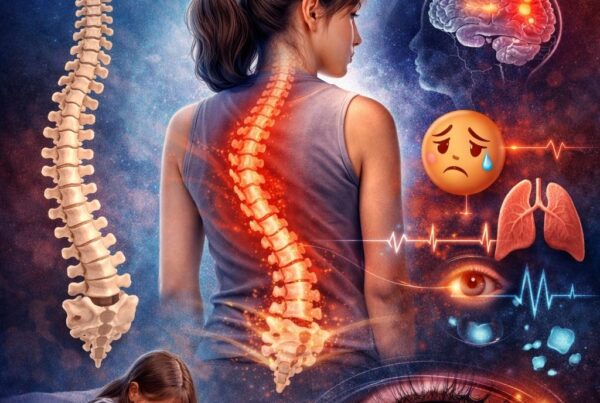
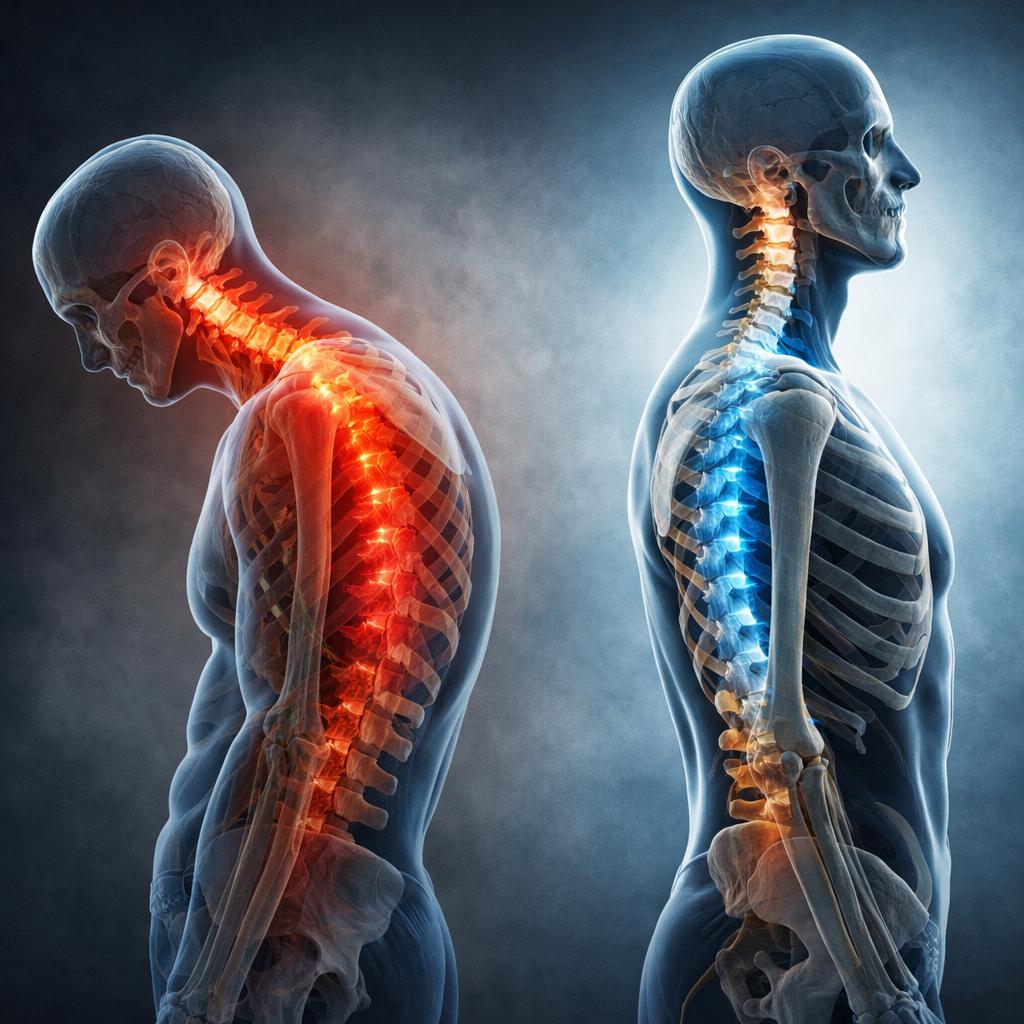
Today, many individuals have encountered the advice “sit upright” or “pull your shoulders back” at some point in their lives. In societal perception, an upright posture is associated with confidence, health, discipline, and even moral superiority, while a slight hunch or relaxed sitting is generally seen as laziness, lack of confidence, or an inevitable harbinger of future chronic pain. However, the modern medical world, physiotherapy literature, and biomechanical research have increasingly begun to question this deeply rooted belief. Scientific studies struggle to support the existence of a single “ideal” posture and the claim that deviations from this ideal directly lead to pain.[1, 2] So, the following question inevitably arises: Is posture really as important as we think? Or is the main factor we should focus on for the health of our body movement itself rather than a static position? This report examines the concept of posture through its historical, biomechanical, and psychosocial dimensions and comprehensively analyzes the scientific foundations of the philosophy that “the best posture is the next posture.”
Summary: A Balanced and Free Posture
The conclusion reached in light of the scientific literature is clear: Posture alone is not the sole determinant of pain or health. The concept of a “single correct posture” is an outdated paradigm that ignores the vast adaptive capacity of human physiology and individual differences.[2, 12] The real threat to our body is not the visual shape of our posture, but how long we remain “fixed” in that posture.
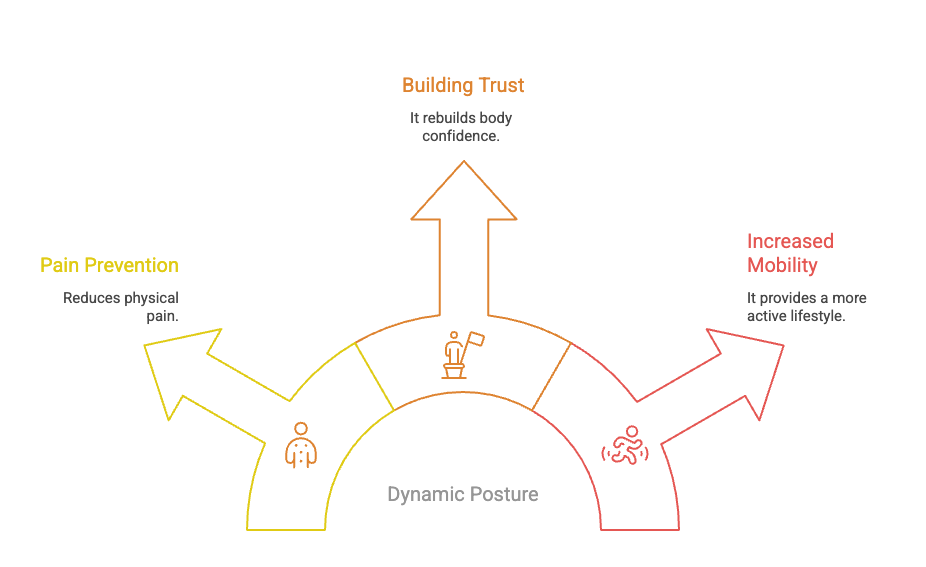
For a healthier life, instead of trying to sit “like a soldier,” we should develop the habit of moving more frequently, changing positions, and interpreting the mild discomfort signals from our body (fidgeting) as cues to “move” and adjust our position.[26, 31, 37] Our spine is strong, movement is the most effective medicine for tissues, and as established by scientific evidence: The best posture is the posture that is constantly changed.[12, 27] This approach not only prevents physical pain but also rebuilds an individual’s confidence in their own body, opening the door to a more active and higher-quality life.
Definition of the Concept of Posture and Its Historical Development
Posture is technically defined as the spatial alignment of body parts relative to each other and to the line of gravity.[3, 4] This concept is not merely a static position of the skeletal system; it is a dynamic phenomenon that emerges as a result of the continuous interaction of the musculoskeletal system, vision, the vestibular system (balance), and somatosensory (sensory) inputs.[3] This automatic and unconscious response of the body against gravity theoretically aims to maintain balance with minimum energy expenditure and minimal stress on anatomical structures.[3, 5]
When the historical process is examined, it is seen that the concept of “ideal posture” originates from military training in the 16th century and medical approaches in the 19th century.[6] Especially in the 19th century, studies conducted by German anatomists on cadavers and living subjects introduced the concept of a “plumb line,” assumed to pass through the body, into medical literature.[6, 7] During this period, upright posture was accepted not only as an indicator of health but also as a measure of civilization.[6] By the mid-20th century, researchers such as Kendall standardized the ideal curves of the spine and the alignment of joints, and began to define deviations from this line as “pathological” or “abnormal.”[7, 8] However, current evidence reveals that these rigid standards do not reflect natural variations in the healthy population, the effects of aging, and individual anatomical differences.[7, 9]
Definition Type Focus Area Key Feature Biomechanical Definition Gravity and segment alignment Maintenance of balance and stability [3] Physiological Definition Muscle tone and neural control Interaction of CNS, vision, and vestibular system [3] Historical Definition Aesthetics and discipline Military order and 19th-century plumb line standard [6] Functional Definition Movement and adaptation Energy conservation and pain-free function [5]
The main purpose of posture is to maintain stability by keeping the body’s center of mass within the base of support and to optimize the visual axis by keeping the head upright.[4, 10] This process is managed by the central nervous system (CNS) through continuously processing incoming sensory data and generating corrective responses via muscle synergies.[3]
Scientific Analysis of the “Poor Posture = Pain” Relationship
One of the most common beliefs among healthcare professionals and the public is that an increase or decrease in spinal curvatures (for example; increased lordosis or more pronounced kyphosis) is the main source of pain. However, systematic reviews conducted over the past twenty years have largely refuted this linear relationship between posture and pain.[1, 2, 11]
Evidence on Low Back Pain and Spinal Alignment
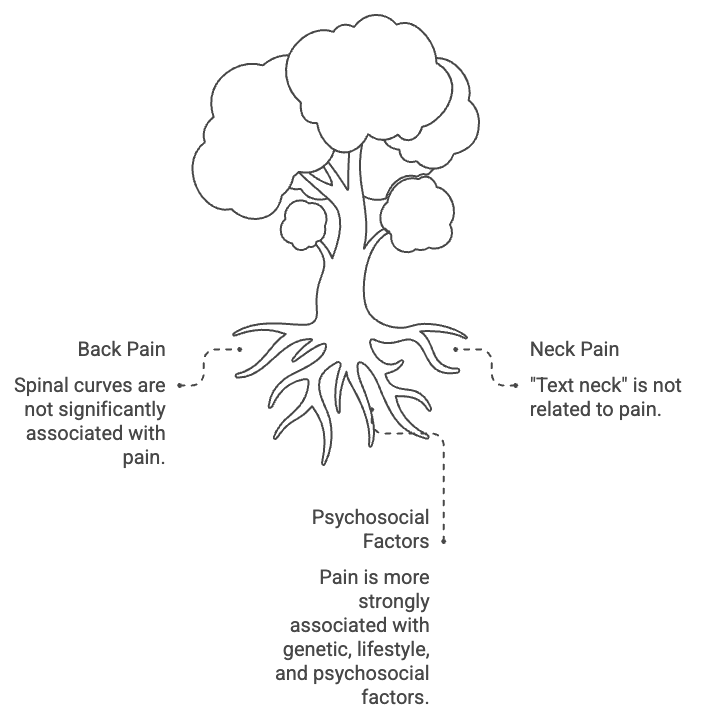
Large-scale studies show that there is no significant difference in spinal curvatures between individuals with low back pain and those without any pain.[11] For example, in an analysis conducted on a group of 600 individuals; no relationship was found between parameters such as lumbar curvature (lordosis), pelvic position, and leg length discrepancy with the presence of pain.[11] Similarly, it has been determined that postural asymmetries during adolescence do not increase the risk of pain in adulthood.[11] The literature shows that low back pain is more strongly associated with genetic, lifestyle, and psychosocial factors rather than physical posture.[9, 12]
Neck Pain and the “Text Neck” Debate
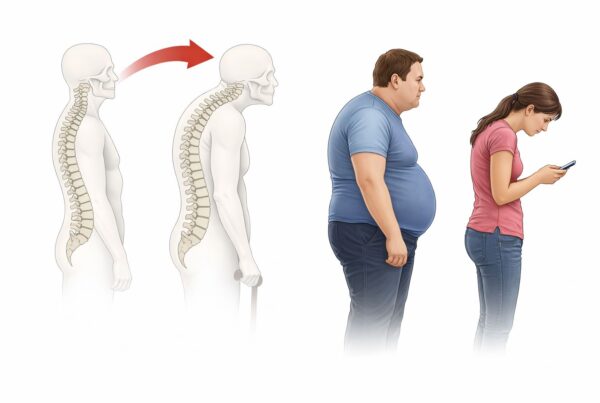
The term “text neck,” which has become popular with the increasing use of smartphones and tablets, is based on the claim that keeping the head in a forward-flexed position leads to neck pain and disc degeneration.[13, 14] However, scientific data on this issue are quite cautious. In a study conducted on young adults aged 18–21, no relationship was found between phone usage duration or neck angle and pain.[15, 16] Similarly, in a larger sample consisting of 550 adults, it was found that “text neck” posture is not associated with the frequency or severity of pain.[15, 16]
Neck pain is thought to be more strongly related to factors such as stress, sleep quality, and social support rather than being purely a matter of physical posture.[17, 18] For example, forward head posture in adolescents showed a higher correlation with depression scores rather than pain.[19] This suggests that posture may be a reflection of an individual’s current emotional state rather than a biomechanical “error.”[12]
Study Type Sample Findings Conclusion Systematic Review Adults and Adolescents Relationship between FHP (Forward Head Posture) and neck pain is controversial [17] Weak correlation in adults, none in adolescents [17] Cohort Study 7092 Young Adults No relationship between phone use and neck pain over 5 years [16] Smartphone use is not a cause of pain [16] Cross-Sectional Study 1108 Adolescents No association between slumped posture and neck pain [19] Posture is more related to psychological state [19]
Biomechanical and Physiological Effects of Different Postures on the Body
Although posture does not have a direct cause-and-effect relationship with pain, it is a biomechanical fact that different positions change the loading on tissues. Each posture places more load on certain tissues while allowing others to rest.[19]
Spinal Curvatures and Load Distribution
When the body is upright, the line of gravity passes through the auricle of the ear, the shoulder, the posterior of the hip joint, and the anterior of the knee joint, providing balance.[7] Deviations from this alignment may cause muscles to expend more energy to maintain this balance.[20] For example, a sitting position in which the trunk is inclined forward leads to higher activity in the lumbar muscles (iliocostalis lumborum and multifidus) and consequently an increased sensation of discomfort.[21, 22] However, as long as this loading remains within the tolerance limits of the tissue, it does not cause injury; the body’s capacity for adaptation is high enough to tolerate such variable loading.[11]
Intervertebral Disc Pressure and Hydration
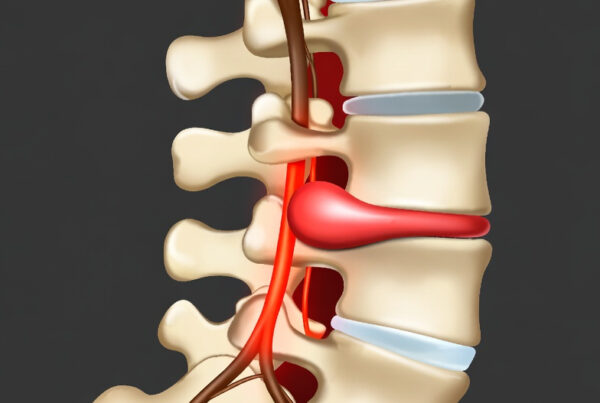
The effect of posture on the discs is important in terms of tissue nutrition. Research shows that a fully upright sitting position at 90 degrees creates more pressure on the lumbar discs compared to a slightly reclined position at 135 degrees.[23] Prolonged static loading may negatively affect fluid exchange (hydration) within the discs. Discs function like a sponge, losing fluid under pressure and absorbing fluid when the pressure is removed.[23, 24] Therefore, remaining in a fixed position (no matter how “correct” it is) for a long time may disrupt the metabolic balance of the disc.[25]
Position Angle Relative Pressure on the Disc Effect 70° (Slouched) Moderate Tension in posterior ligaments [23] 90° (Upright) High Maximum compression in lumbar discs [23] 135° (Reclined) Lowest Minimum disc pressure and muscle fatigue [23]
The Biological Cost of Staying in the Same Position for a Long Time
Rather than the “shape” of posture, how long one remains in that posture is the main determining factor in terms of health. The human body is evolutionarily designed to move; therefore, even the most “perfect” looking posture can become harmful if maintained for too long.[12, 26, 27]
Static Loading, Ischemia, and Muscle Stiffness
When remaining immobile in a position for more than 20–30 minutes, static loading begins in the tissues due to the effect of gravity.[28, 29] Reduced blood flow in muscles (ischemia), accumulation of lactate, and the persistence of low-level muscle activity lead to muscle fatigue and stiffness.[22, 30] Experiments conducted in laboratory settings have shown that uninterrupted sitting for 4.5 hours significantly increases stiffness in lumbar muscles; however, when regular muscle contractions (small movements or electrical stimulation) are added to this process, stiffness can be prevented.[30]
Inflammatory Response and Tissue Sensitivity
Prolonged static sitting may lead to stretching of spinal tissues (ligaments and the outer annulus of the disc) and cause the release of inflammatory mediators called cytokines (for example IL-1β, TNF-α) in these tissues.[24, 31, 32] This biochemical process may lower the pain threshold by sensitizing nerve endings.[31, 33] Especially static positions reduce tissue oxygenation and make it difficult to remove metabolic waste, which is one of the main biological mechanisms that trigger chronic discomfort.[22, 31]
The Importance of Movement Variability: “Postural Variability”
Modern ergonomics and physiotherapy approaches now emphasize the concept of “postural variability” instead of recommending fixed positions. The main slogan of this approach, accepted as an expert consensus, is as follows: “The best posture is the next posture.”[23, 26, 27, 34]
Dynamic Sitting and Micro-Postural Shifts
Studies conducted on office workers have shown that rather than total sitting time, “sitting behavior” (that is, how frequently positions are changed) is more strongly associated with low back pain.[31] Dynamic sitting includes small movements such as slightly shifting from side to side while sitting, changing leg position, and stretching forward and backward. These micro-movements distribute the load among different tissue fibers and prevent excessive loading (focal overload) in a single region.[31, 35]
The “Lubricating” Effect of Movement: “Motion is Lotion”
The nutrition of joints and discs occurs through a pump mechanism. Pressure changes that occur during movement help nourishing fluids enter the tissue.[36] This effect of movement not only provides physical relief but also creates a positive effect on the central nervous system by modulating pain perception.[37]
Movement Type Mechanism Clinical Benefit Micro-shifts Load transfer Prevents local muscle fatigue [35] Active breaks Increased blood flow Removal of metabolic waste [28] Dynamic sitting Disc hydration Intervertebral disc nutrition [24] Position change Neural adaptation Reduced pain sensitivity [31]
The Relationship Between Posture, Muscle Activity, and Loading
It has been observed that muscle activation patterns change in individuals with pain. This change is generally a “protective strategy” developed by the body to protect the painful area, but in the long term, it may become a problem itself.
“Freezing” in Muscle Activity and Loss of Motor Variability
In individuals with chronic pain, it is seen that postural variability decreases and the body tends to move as a single “block.”[38, 39] High-Density EMG (HDEMG) studies have revealed that pain-free individuals can distribute muscle activity among different fiber groups within the muscle during a task, whereas individuals with pain continuously keep the same muscle region (centroid) active.[35, 40] This “freezing” effect may lead to focal overload in that region and contribute to the chronicity of pain.
Protective Strategies: Guarding Behavior
Motor responses to pain are individual. Some individuals excessively contract their muscles to stabilize the painful region (over-activators/guarding), while others do not use that region at all (under-activators).[41, 42] Both situations may increase loading on the tissue and delay the healing process. Here, posture should be evaluated not as a cause, but as a “response” of the body to pain or anticipated pain.[1, 12]
Biopsychosocial Model: How Does It Explain the Relationship Between Posture and Pain?
The traditional biomedical model views posture as a faulty machine part that needs to be “corrected.” However, the modern biopsychosocial (BPS) model defines pain as a complex interaction of biological, psychological, and social factors.[43, 44]
The Power of Beliefs and the Nocebo Effect
Telling a person that their “posture is incorrect” or that their “spine is sensitive” may create a sense of “fragility.”[12, 15] This may lead the individual to avoid normal movements (fear-avoidance) and perceive even the slightest sensation as severe pain.[45, 46] In the scientific literature, this is referred to as the “Nocebo effect”; that is, the belief that one’s posture is harmful can initiate or intensify the experience of pain even in the absence of physical damage.[2, 15]
Fear-Avoidance Cycle (Fear-Avoidance Model)
According to the BPS model, individuals who tend to catastrophize pain restrict themselves to protect their posture and become afraid to move.[46, 47] This restriction leads to muscle weakness, tissue stiffness, and more pain, creating a vicious cycle.[47, 48] However, the spine is an extremely resilient, adaptive, and reliable structure. Feeling the obligation to “sit upright” may weaken confidence in this natural resilience and make the individual “hypervigilant.”[12]
BPS Factor Effect on Posture Effect on Pain Psychological (Fear, Anxiety) Rigid and restricted posture Decreased pain threshold [45] Biological (Tissue Loading) Increased static loading Release of inflammatory mediators [31] Social (Work Stress, Beliefs) “Fragile spine” belief Chronicity and disability [47]
Clinical Implications: New Approaches in Physiotherapy and Daily Life
In light of these scientific facts, a fundamental shift in our approach to posture is necessary. Practical implications for both healthcare professionals and individuals are as follows:
Rethinking Office Ergonomics
The classical 90/90/90 rule may be a starting point, but it is not a “gold standard.”[49] The best sitting strategy is to transition between different positions throughout the day. Slightly reclining, extending the legs, occasionally working while standing, or taking short walks allows tissues to be loaded in different ways.[49, 50] Adjustable desks and chairs are important tools to support this “dynamic sitting” style.[50]
A New Era in Patient Education: Removing Fear
Physiotherapists should encourage patients by saying “the body loves movement and variability” instead of blaming them by saying “your posture is incorrect.”[2, 19] Misbeliefs that the spine is fragile and may “slip” at any moment should be dismantled; instead, it should be emphasized that the spine is a highly robust structure with the capacity to bear load.[12] Research shows that increasing postural awareness can reduce pain, but this awareness should be focused not on “achieving perfect posture” but on “reading body signals and moving accordingly.”[38]
Movement Prescription: “Reverse the Curve”
If you have been working in a forward-flexed position or looking at your phone for a long time, stretching in the opposite direction at intervals (for example, opening the rib cage or extending backward) helps maintain tissue balance.[11] This “reverse the curve” strategy is not a specific posture exercise, but rather a method of providing different input to the central nervous system and tissues.[37]
Metaphors and Everyday Examples
To make complex biomechanical processes understandable for everyone, the following metaphors can be used:
- The Body is Like an Orchestra: In a healthy orchestra, each instrument comes into play at different times. If muscles transfer load among each other in posture (variability), fatigue does not occur. In pain conditions, however, the orchestra starts playing the same note (the same muscle fiber) very loudly all the time.[33]
- Car Tires: If you wear out a car tire always from the same point, its lifespan shortens. Not changing your posture is like constantly loading the same point of the tire. Moving distributes the wear across the entire surface and protects the system.[33]
- Sensitive Alarm System: Pain can sometimes act like a fire alarm that goes off even when there is no smoke. The pain you feel when you think you are in a “bad” posture may not be due to tissue damage, but because the alarm system (the nervous system) has become overly sensitive to that position.[33]
References
- Exploring the clinical utility of postural outcome tools for back and …, https://pmc.ncbi.nlm.nih.gov/articles/PMC12603532/
- Posture ≠ Pain: The Evidence-Based Reality Every Physio Should Know, https://thephysioguide.com.au/posture-%E2%89%A0-pain-the-evidence-based-reality-every-physio-should-know/
- Posture and posturology, anatomical and physiological profiles: overview and current state of art – PMC, https://pmc.ncbi.nlm.nih.gov/articles/PMC6166197/
- Biomechanics of Posture | PPTX – Slideshare, https://www.slideshare.net/slideshow/biomechanics-of-posture-228936036/228936036
- Posture and posturology, anatomical and physiological profiles: overview and current state of art – ResearchGate, https://www.researchgate.net/profile/Giovanni-Tomasello-2/publication/316643872_Posture_and_posturology_anatomical_and_physiological_profiles_Overview_and_current_state_of_art/links/59096f9da6fdcc49616801f4/Posture-and-posturology-anatomical-and-physiological-profiles-Overview-and-current-state-of-art.pdf
- Upright and uptight: the invention of posture | by Tom Jesson | Medium, https://medium.com/@thomas_jesson/upright-and-uptight-the-invention-of-posture-fe48282a4487
- THE STANDARD POSTURE IS A MYTH: A SCOPING REVIEW – PMC, https://pmc.ncbi.nlm.nih.gov/articles/PMC11492508/
- The progression of human posture concept and advances in postural assessment techniques – ResearchGate, https://www.researchgate.net/publication/376795183_The_progression_of_human_posture_concept_and_advances_in_postural_assessment_techniques
- Understanding Good Posture | Malvern Physiotherapy Clinic, https://malvernphysio.com.au/does-posture-cause-pain/
- Posture As a Determinant of Health: A Narrative Review of Its Multisystem Effects – ijphy, https://www.ijphy.com/index.php/journal/article/download/1952/682
- Have you heard about ‘The Posture Myth’? – Gold Coast Physio & Sports Health | Ashmore & Burleigh, https://www.mygcphysio.com.au/education/have-you-heard-about-the-posture-myth/
- The Posture Hero Back Brace – Nathan Bull Osteopathy Southampton, https://www.nathanbullosteopathy.co.uk/blog/postureherobrace
- texting – ChiroMed, https://chiromed.com/tag/texting/
- Defining text neck: a scoping review – PubMed, https://pubmed.ncbi.nlm.nih.gov/37405530/
- “Good” vs “Bad” Posture – The Physio Clinic, https://www.thephysioclinic.com.au/2023/07/good-vs-bad-posture/
- Everything You Need To Know About “Text Neck” Syndrome – Square One Active Recovery, https://squareone.com.sg/resources/text-neck-neck-pain-chiropractor-singapore/
- The Relationship Between Forward Head Posture and Neck Pain: a …, https://pmc.ncbi.nlm.nih.gov/articles/PMC6942109/
- Psycho‐physical well‐being in adolescent users of social networking sites: Empirical evidence for text neck syndrome and related measures | Request PDF – ResearchGate, https://www.researchgate.net/publication/392422568_Psycho-physical_well-being_in_adolescent_users_of_social_networking_sites_Empirical_evidence_for_text_neck_syndrome_and_related_measures
- The straight and narrow of posture: Current clinical concepts – RACGP, https://www1.racgp.org.au/ajgp/2021/november/posture-clinical-concepts
- Prevalence of Postural Changes and Musculoskeletal Disorders in Young Adults – PMC, https://pmc.ncbi.nlm.nih.gov/articles/PMC10743088/
- Perceived body discomfort and trunk muscle activity in three prolonged sitting postures – J-Stage, https://www.jstage.jst.go.jp/article/jpts/27/7/27_jpts-2015-165/_article
- Perceived body discomfort and trunk muscle activity in three prolonged sitting postures – PMC, https://pmc.ncbi.nlm.nih.gov/articles/PMC4540846/
- Why Does Sitting Up Straight Hurt My Lower Back? – aoFIT, https://aofit.com/blogs/news/why-does-sitting-up-straight-hurt-my-lower-back
- Complex Mechanical Loading and Pro‐Inflammatory Cytokines in Intervertebral Disc Degeneration – PMC, https://pmc.ncbi.nlm.nih.gov/articles/PMC12835194/
- Complex Loading Affects Intervertebral Disc Mechanics and Biology – PMC – NIH, https://pmc.ncbi.nlm.nih.gov/articles/PMC3138834/
- Controversies in the Science of Sedentary Behaviour and Health: Insights, Perspectives and Future Directions from the 2018 Queensland Sedentary Behaviour Think Tank – PMC, https://pmc.ncbi.nlm.nih.gov/articles/PMC6926563/
- Controversies in the Science of Sedentary Behaviour and Health: Insights, Perspectives and Future Directions from the 2018 Queensland Sedentary Behaviour Think Tank – ResearchGate, https://www.researchgate.net/publication/337617514_Controversies_in_the_Science_of_Sedentary_Behaviour_and_Health_Insights_Perspectives_and_Future_Directions_from_the_2018_Queensland_Sedentary_Behaviour_Think_Tank
- Sitting Less, Recovering Faster: Investigating the Relationship between Daily Sitting Time and Muscle Recovery following Intense Exercise: A Pilot Study – MDPI, https://www.mdpi.com/2411-5142/9/1/24
- Effects of Prolonged Sitting with Slumped Posture on Trunk Muscular Fatigue in Adolescents with and without Chronic Lower Back Pain – PMC, https://pmc.ncbi.nlm.nih.gov/articles/PMC7822118/
- Sitting for Too Long, Moving Too Little: Regular Muscle Contractions Can Reduce Muscle Stiffness During Prolonged Periods of Chair-Sitting – Frontiers, https://www.frontiersin.org/journals/sports-and-active-living/articles/10.3389/fspor.2021.760533/full
- (PDF) Low back pain and sitting time, posture and behavior in office …, https://www.researchgate.net/publication/390036012_Low_back_pain_and_sitting_time_posture_and_behavior_in_office_workers_A_scoping_review
- Cytokine Involvement in Biological Inflammation Related to Degenerative Disorders of the Intervertebral Disk: A Narrative Review – PMC, https://pmc.ncbi.nlm.nih.gov/articles/PMC5883634/
- Using Metaphors & Analogies to Improve Patient Education in Physiotherapy – 360Clinician, https://360clinician.com/blog/using-metaphors-analogies-to-improve-patient-education-in-physiotherapy/
- Lower Back Pain: Causes, Treatment, and Prevention – FeM Surgery, https://www.femsurgery.com/back-pain-causes-treatment-and-prevention
- New insights into pain-related changes in muscle activation revealed by high-density surface electromyography – Pure, http://pure-oai.bham.ac.uk/ws/files/96798143/Review_SpinalPain_JEK_r1_clean.pdf
- Notes from the Frontier of Pain Science with Diane Jacobs | LarsAvemarie.com, https://www.larsavemarie.com/the-notes-from-the-frontier-of-pain-science-with-diane-jacobs/
- BACK-etology: 8 Lifestyle Choices to Alleviate Back Pain | Confluent Health, https://confluenthealth.com/resources/back-etology-8-lifestyle-choices-to-alleviate-back-pain/
- Postural awareness and its relation to pain: validation of an innovative instrument measuring awareness of body posture in patients with chronic pain – PMC, https://pmc.ncbi.nlm.nih.gov/articles/PMC5889545/
- Spinal postural variability relates to biopsychosocial variables in patients with cervicogenic headache – PMC, https://pmc.ncbi.nlm.nih.gov/articles/PMC8253805/
- The Pain Intensity/Quality and Pain Site Association with Muscle Activity and Muscle Activity Distribution in Patients with Chronic Low Back Pain: Using a Generalized Linear Mixed Model Analysis – PMC, https://pmc.ncbi.nlm.nih.gov/articles/PMC9159876/
- A Comprehensive Review of Pain Interference on Postural Control: From Experimental to Chronic Pain – PMC, https://pmc.ncbi.nlm.nih.gov/articles/PMC9230450/
- Reduced muscle activity variability in lumbar extensor muscles during sustained sitting in individuals with chronic low back pain | PLOS One – Research journals, https://journals.plos.org/plosone/article?id=10.1371/journal.pone.0213778
- Biopsychosocial Approach to Assessing and Managing Patients with Chronic Pain – PubMed, https://pubmed.ncbi.nlm.nih.gov/26614718/
- The biopsychosocial model and chiropractic: a commentary with recommendations for the chiropractic profession – PMC, https://pmc.ncbi.nlm.nih.gov/articles/PMC5461754/
- Fear-Avoidance Beliefs and Clinical Outcomes for Patients Seeking Outpatient Physical Therapy for Musculoskeletal Pain Conditions – JOSPT.org, https://www.jospt.org/doi/10.2519/jospt.2011.3488
- Making Sense of Low Back Pain and Pain-Related Fear | Journal of Orthopaedic & Sports Physical Therapy – jospt, https://www.jospt.org/doi/10.2519/jospt.2017.7434
- Work-Related Fear-Avoidance Beliefs and Risk of Low-Back Pain: Prospective Cohort Study Among Healthcare Workers – PMC, https://pmc.ncbi.nlm.nih.gov/articles/PMC12361326/
- Fear-avoidance beliefs are associated with changes of back shape and function – PMC – NIH, https://pmc.ncbi.nlm.nih.gov/articles/PMC11932623/
- What Is the 90/90/90 Rule for Ergonomics? A Complete Guide to Proper Sitting Posture, https://sihoooffice.com/blogs/insights/what-is-the-90-90-90-rule-for-ergonomics
- Challenging the “perfect posture” myth with Australian physio Jarryd Croxford – Buro Seating, https://buroseating.com/challenging-the-perfect-posture-myth-with-australian-physio-jarryd-croxford/